What Makes a Good Fitness Coach? Key Skills for Success
There are several skills every fitness coach absolutely needs to have in order to gain new clients, retain existing clients and develop a network and positive reputation in the industry. Without these skills, the job likely won’t be much fun anyway.
By AIHP Founder Rick Prince
Just as with any career field or job title, there are specific skill sets that often lead to greater success. Education, degrees and certifications teach you the foundation. On-the-job experience sharpens your knowledge and provides practical experience. Yet sometimes, it’s our soft skills that are the differentiating factors between being decent and great at a particular job.
I’ve found this to be true in the fitness space. There are several skills that I believe every fitness coach absolutely needs to have in order to gain new clients, retain existing clients and develop a network and positive reputation in the industry. Without these skills, the job likely won’t be much fun anyway.
So, let’s look beyond education and certifications, and break down the most critical skills for building a career as a fitness coach: communication and practical application. Plus, I’ll share a few tips on how to sharpen them.
(A quick note: When referring to fitness coaches, personal trainers and strength and performance coaches throughout this piece, I’m not referring to coaches of collegiate, elite or professional athletes. The rigor and intensity of these training relationships often requires a more specific set of skills that we may discuss in a future blog post.)
Nothing Matters More Than Communication
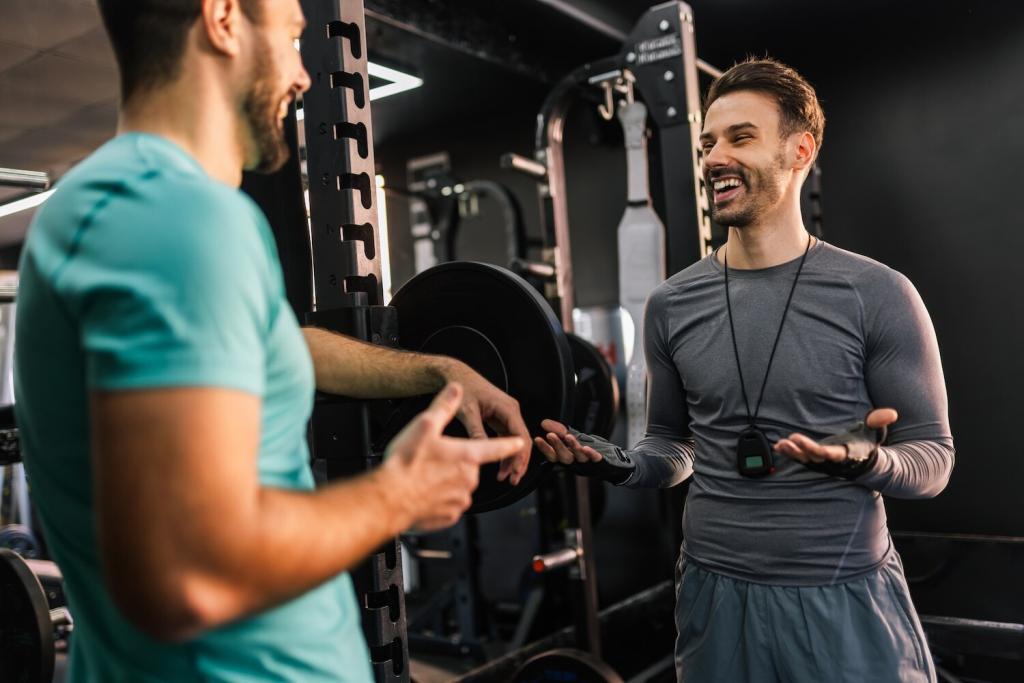
The most critical skill for a fitness coach is being able to communicate professionally. You’re going to meet new people all the time, and being a great communicator helps you develop rapport with pretty much anyone and form a good working relationship.
Communication also extends to following up with clients with professionalism at all times, practicing active listening with clients and colleagues, and knowing how to properly explain exercises during training sessions.
I don’t care how many PhDs a personal trainer might have, it’s important to avoid communicating with clients using kinesiology jargon. Explain exercises in terms your clients understand. Otherwise, they’ll find another trainer who can.
A personal trainer who lacks good communication skills is likely going to have a pretty negative experience trying to build their business. Without the skills to quickly develop rapport and communicate properly and professionally during training sessions, it will be a struggle to gain new clients and retain existing ones.
Above all, I believe communication skills matter most.
You Need to Know How to Practically Apply Your Knowledge
It’s important to have a solid educational foundation so that you know what you’re doing, in regard to understanding how the body works and developing programming. But you also need to know how to add specificity to each of your programs rather than creating the same programming for all of your clients.
You need to be able to take what you’ve learned in the educational setting, understand your client’s individual needs and develop a program specifically for them. This is why one of the most important learned skills is working within your scope of practice and scope of knowledge.
Your scope of practice is static and you need to stay within that scope. As trainers, we cannot go over the line into a chiropractor’s domain or suggest exercises to treat an injury. We are not physical therapists. Same thing with nutrition—suggesting supplements is the exclusive domain of a registered dietitian. Those are the main culprits I find when it comes to going outside your scope of practice as a fitness coach.
Scope of knowledge, however, changes over time as you become more knowledgeable in certain areas and complete specialization certifications. Knowing how to progress a program effectively and safely for a client within your scope of practice and knowledge is probably one of the most important things a trainer can do.
How to Sharpen Your Communication and Application Skills
While communication and practical application skills are much more intuitive for some people than others, everyone benefits from sharpening their skill set. In a gym setting, there are some easy ways to do so.
Shadow Other Trainers: One of the biggest learning opportunities that a lot of trainers don’t fully appreciate is learning from your fellow colleagues. The first gym I worked at was a big, fancy club in Manhattan. There were 70 full time trainers, and I would watch them all the time to see what they were doing and listen to what they were saying. I think I learned more by observing and talking to these trainers than I did in my four years of college and in my personal training certifications.
Learning from your peers is one of the best resources you have. Consider asking your fellow trainers if you can shadow them during their sessions. Watch how they interact. Listen to what they say and how they explain exercises. Observe how they develop and maintain rapport. Then, bring back what is most useful to your own practice.
Ask for Feedback: Ask your fellow trainers, especially those more experienced than you, to shadow you during your sessions and get their constructive feedback. This will give you a better idea of areas you need to work on and where your communication could be improved.
Another option is to ask your clients for feedback, but you’ll want to be strategic with how you do it. Clients are paying you and assume that you are fully equipped to help them. So, you don’t necessarily want to share that you’re not experienced. But especially when you’re first starting out, you can still be transparent: “Hey, I’m a new trainer. I have my degree/certification, and I’ve done many training sessions. So that you can get the best out of me, however, please give me feedback.”
Get In the Reps: Finally, remember that it takes reps to get good at anything. It’s simply about doing enough sessions. Just as with anything, when you’re new at something, you’re likely going to be terrible at it. But the more you do it, the better you’re going to get at it. Your first few sessions aren’t going to be pretty. But as you do more of them, your confidence will increase and everything becomes more fluid.
Final Thoughts
While we can learn a lot from textbooks and courses, nothing takes the place of learning in the real world. As fitness coaches and personal trainers, that’s where we sharpen our communication skills and learn how to apply our knowledge to help each individual client reach their training goals.
While the trainers who start out as great communicators and stronger in real-world application scenarios are likely to build their networks and client rosters faster, there are opportunities for everyone to learn and sharpen their skills if they choose to pursue them. And your success in the industry depends on it.
Read more about what it takes to be a good personal trainer.